In a medium bowl, stir together the condensed cream of chicken soup and the dry onion soup mix until well combined. It will be thick and speckled with onion bits.
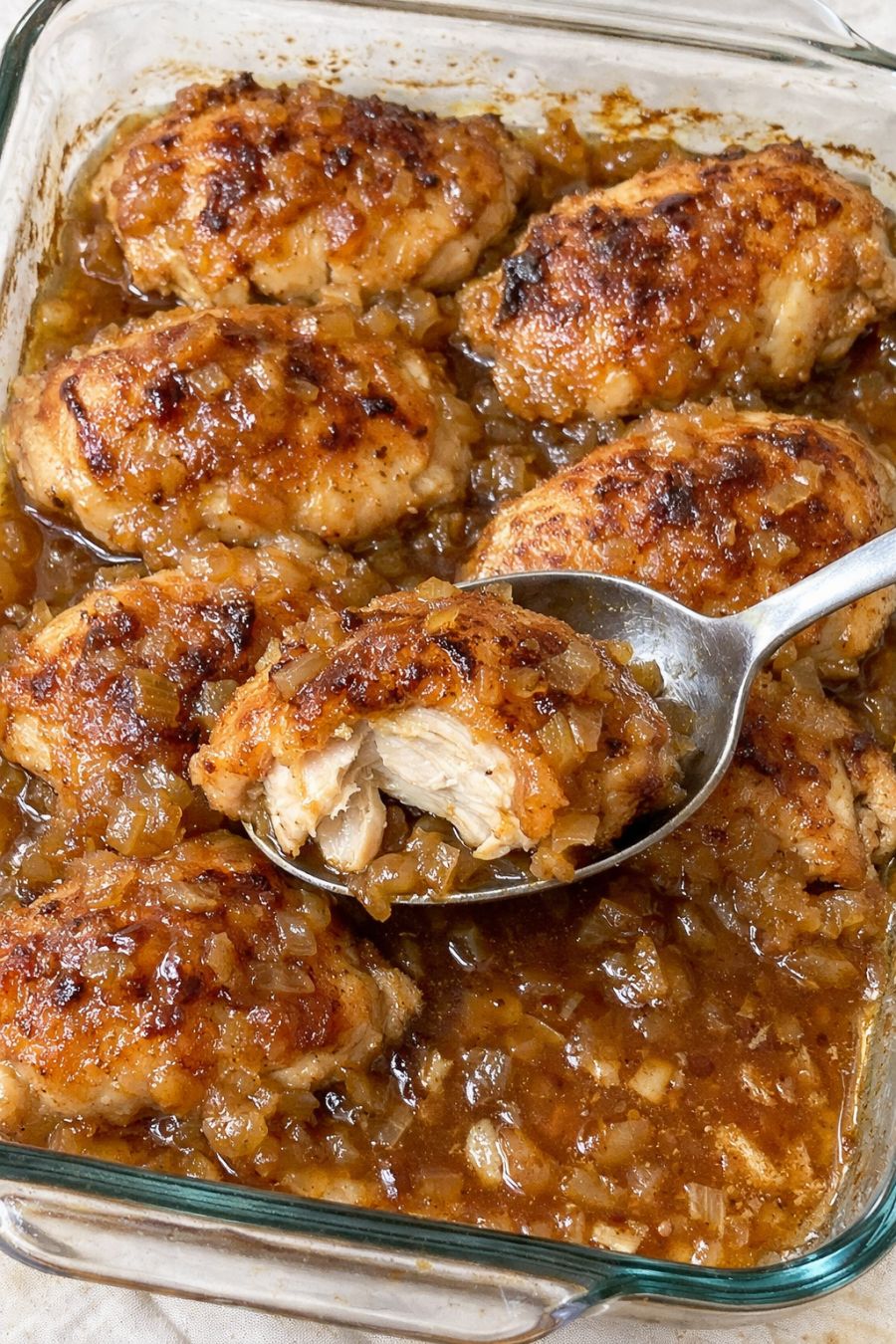
Spoon or pour the soup mixture evenly over the chicken pieces, spreading it so each piece is well coated. The bottom of the dish will have some sauce around the chicken, which will turn into a rich glaze as it bakes.
Cover the baking dish tightly with foil and place it on the middle rack of the preheated oven. Bake covered for 45 minutes. This helps the chicken cook through and stay juicy while the flavors soak in.
After 45 minutes, carefully remove the foil (watch for steam). Baste the chicken by spooning some of the pan sauce over the tops of the pieces. Return the dish to the oven, uncovered.
Continue baking, uncovered, for another 25 to 35 minutes, or until the chicken is cooked through, the skin is golden, and the onion soup glaze is bubbling and starting to caramelize around the edges. The internal temperature of the thickest part of the chicken should reach at least 165°F (74°C).
If you’d like the top a bit more browned, you can move the dish up one rack for the last 5 to 10 minutes, keeping a close eye so the glaze doesn’t burn.
Remove the dish from the oven and let the chicken rest for about 5 to 10 minutes. The sauce will thicken slightly as it cools. Spoon the caramelized onion glaze over the chicken when serving, making sure each portion gets some of the rich juices from the bottom of the dish.
Variations & Tips
You can use almost any bone-in chicken pieces you like, but dark meat (thighs and legs) stays especially moist and forgiving, much like the Sunday dinners many of us grew up with. If you only have boneless, skinless chicken breasts, reduce the covered bake time to about 30 minutes and the uncovered time to 15–20 minutes, watching closely so they don’t dry out.
For a slightly tangier flavor, stir 2 to 3 tablespoons of sour cream or plain yogurt into the soup mixture before baking (this will make it more like the later 1970s versions of this dish). If you prefer a bit more color, sprinkle a little paprika over the chicken before adding the sauce. You can also tuck a few peeled carrot chunks or quartered onions around the chicken in the dish; they’ll roast in the sauce and soak up the flavor, though this technically adds more ingredients beyond the base three.
Food safety tips: Always thaw chicken completely in the refrigerator, never on the counter. Keep raw chicken and its juices away from ready-to-eat foods and wash your hands, cutting boards, and utensils thoroughly with hot, soapy water after handling. Use a food thermometer to ensure the internal temperature of the thickest piece reaches at least 165°F (74°C). Refrigerate leftovers within 2 hours and use within 3 to 4 days, reheating until hot and steaming before serving.