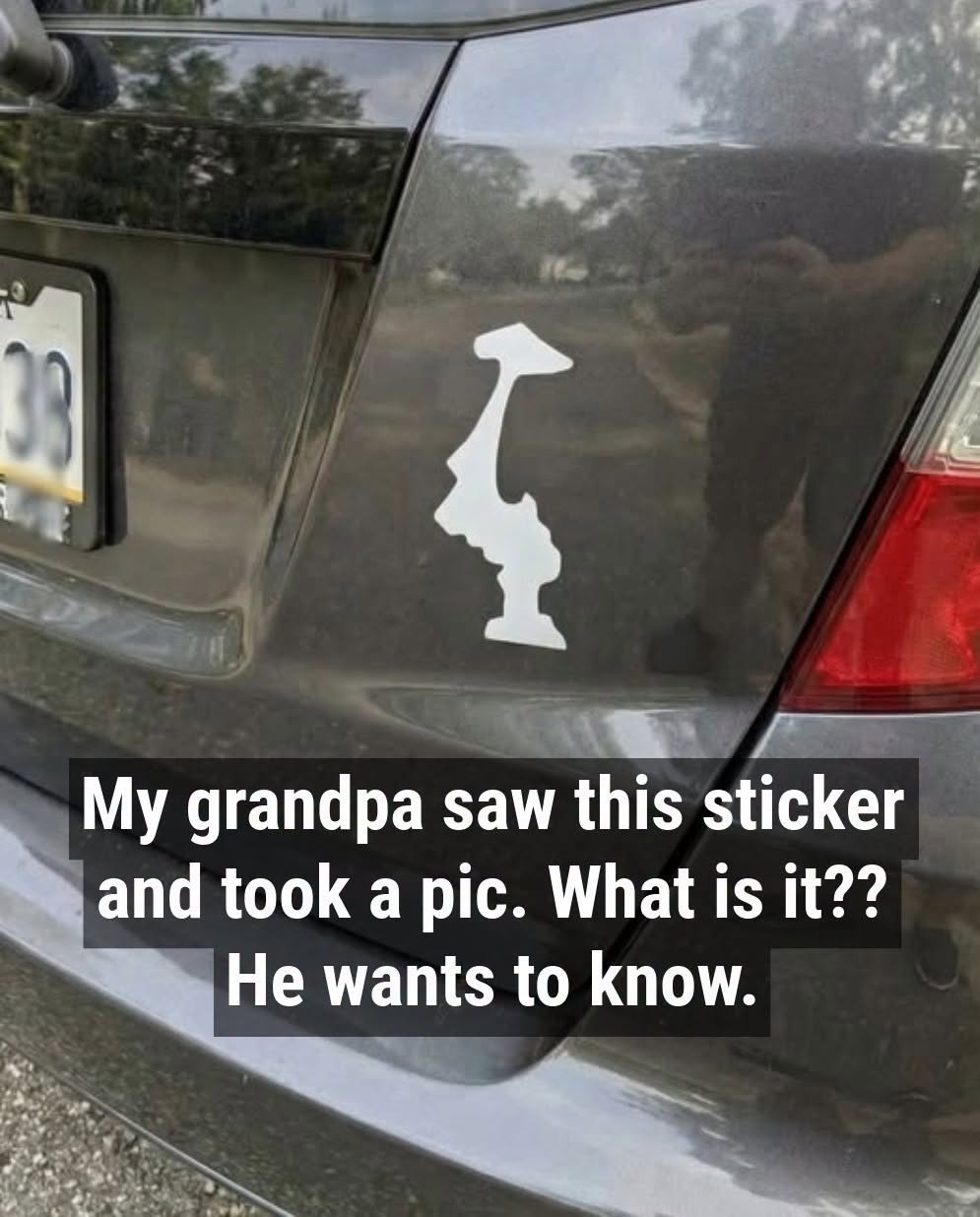
end up upside down without any intended message.
That’s why context matters.
If the display appears alongside signs, stickers, slogans, or other symbols, its intended meaning may be easier to understand.
Why does the image attract so much attention?
Flags are powerful visual symbols.
People recognize them quickly, often without consciously thinking about it.
When something looks slightly “wrong,” the brain notices.
An upside-down flag creates exactly that effect.
It’s familiar—but unfamiliar at the same time.
That makes it particularly effective for attracting attention.
A driver doesn’t need to explain anything verbally.
The unusual position immediately makes people ask:
“Why is that flag upside down?”
A symbol of distress
For some people, the symbolism is personal rather than political.
They may see the upside-down flag as representing difficult circumstances, uncertainty, or a feeling that something is seriously wrong.
In that context, the symbol can be interpreted as a visual expression