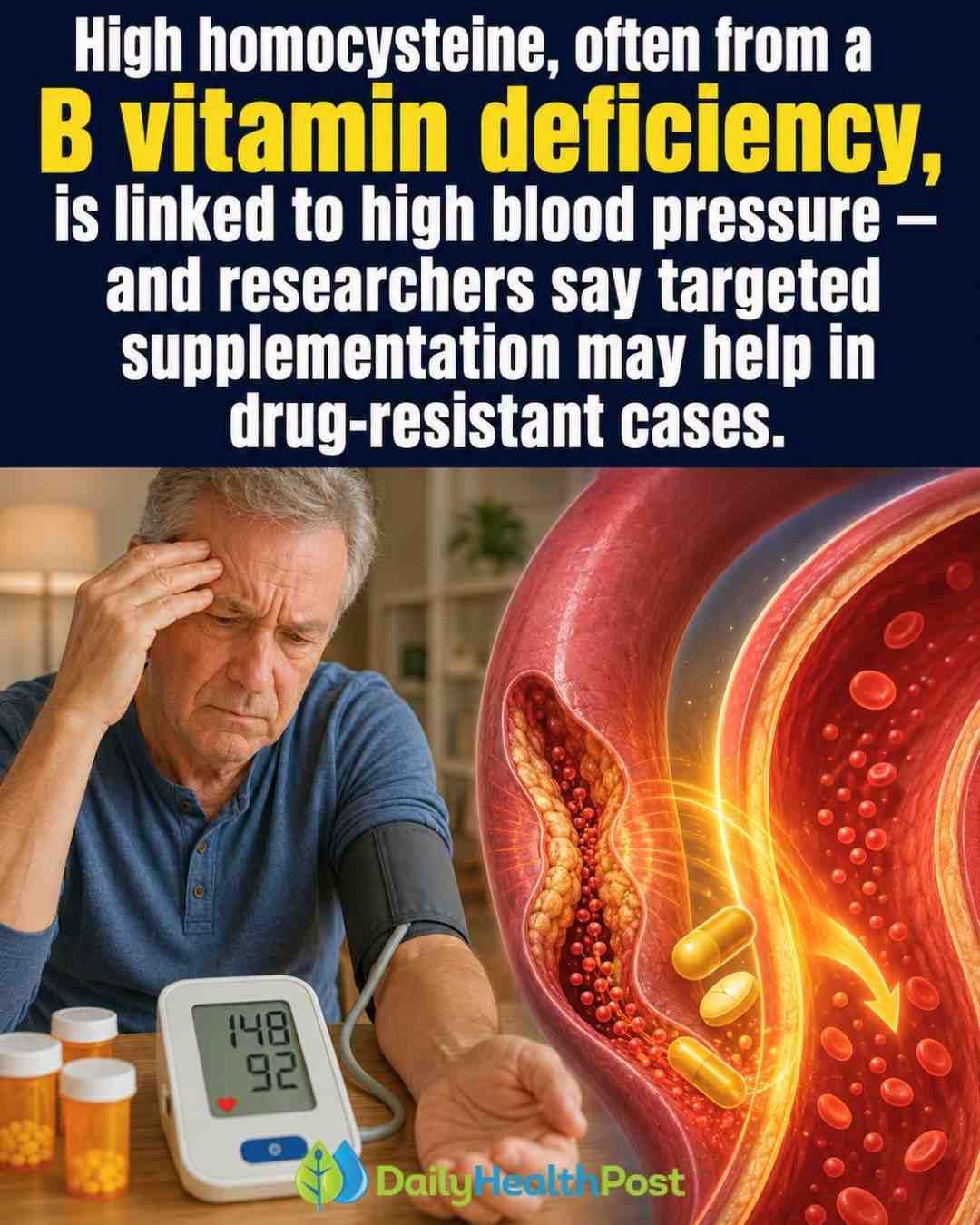
You might find that your homocysteine levels are elevated due to genetic factors or a deficiency in certain vitamins, particularly B vitamins like B6, B12, folate (B9), and riboflavin (B2). The exciting news is that you can lower these levels in a straightforward, safe, and inexpensive way: by incorporating these essential B vitamin supplements into your routine.
This study, which meticulously reviewed previous research, revealed that taking B vitamins could lower your blood pressure by a significant 6 to 13 mmHg. For you, this kind of reduction could make a profound difference, especially if you’ve struggled to achieve success with conventional medications.
Consider this: even a modest reduction of a few points in your blood pressure can dramatically lower your risk of experiencing a stroke or other heart-related problems, directly benefiting your long-term health.
The researchers also highlighted a critical issue with how laboratories measure homocysteine, which directly impacts you. While the current recommended level is 10 micromoles per liter (μmol/L) or lower, many labs still use 11.4 μmol/L as the cut-off for what they consider “normal.”
These scientists firmly believe that this higher number is too lenient and could cause you to miss crucial opportunities for early treatment. They advocate for lowering the “normal” range, ensuring that more individuals like you can receive timely intervention before your health deteriorates further.
However, it’s vital for you to remember that B vitamin supplements should not be taken without first consulting your doctor. While generally safe, the correct dosage and specific type of vitamins can vary significantly for each person, especially if you have other medical conditions or are currently taking other medications.
This pivotal study, spearheaded by Dr. Merrill Elias and published in the American Journal of Hypertension, clearly demonstrates that B vitamins could be a valuable and affordable addition to your current blood pressure treatment plan. For you, if you’re grappling with drug-resistant hypertension, this approach offers a fresh perspective and a new avenue to manage your condition and significantly enhance your overall well-being.