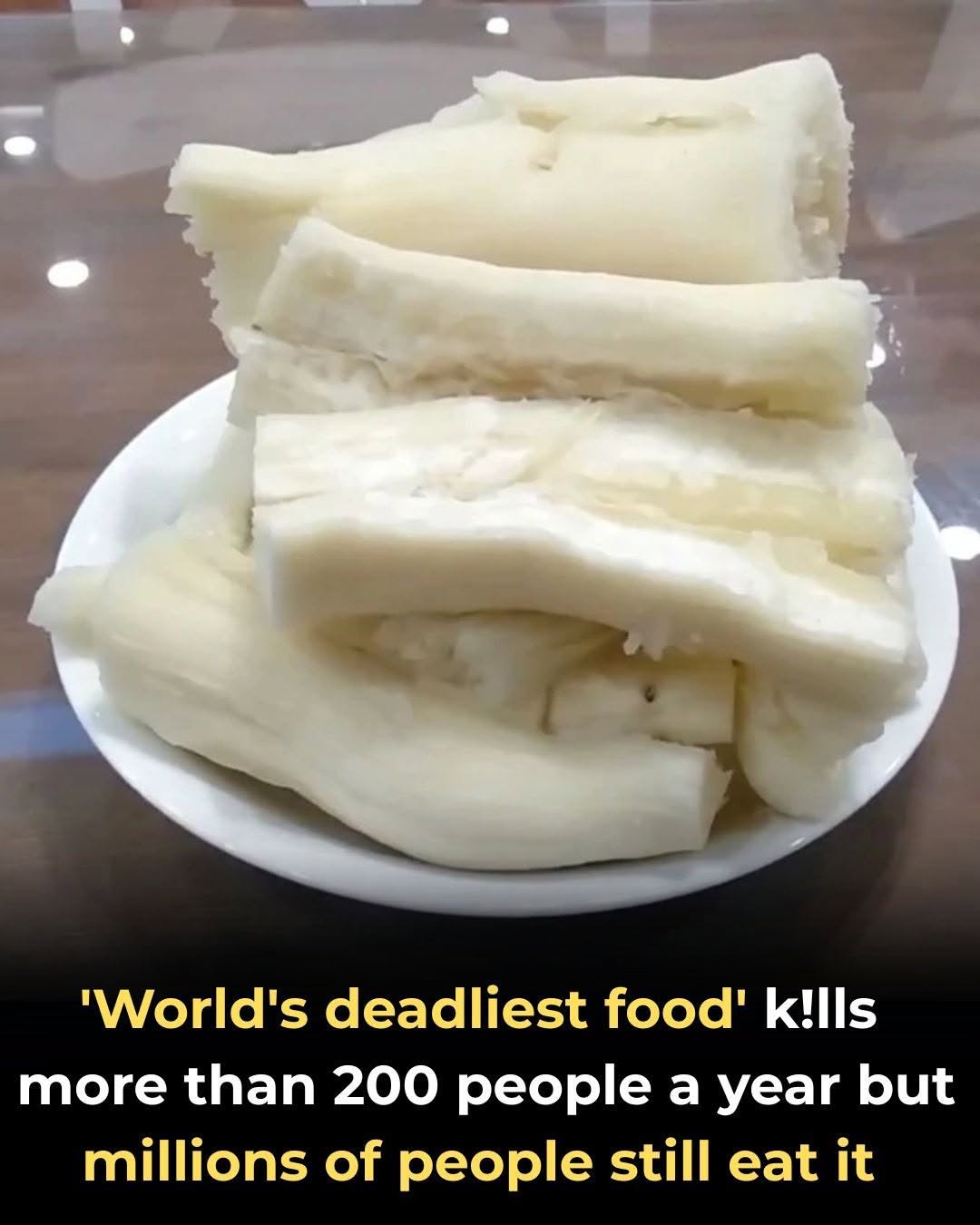
Cassava: The Staple Food That Can Become Dangerous Without Proper Preparation
Cassava is one of the world’s most important staple foods.
Millions of people rely on it as an important source of calories, particularly in parts of Africa, Asia, and South America.
But despite its importance as a food crop, cassava can also pose a serious health risk if it is not properly processed and prepared.
This is because certain varieties of cassava contain naturally occurring compounds that can release cyanide.
What Is Cassava?
Cassava is a root crop that originated in South America and is now cultivated in many tropical and subtropical regions around the world.
It is also known by names such as yuca and manioc.
The cassava root can be processed into a variety of foods, including flour, starch, and traditional dishes.
Because the plant grows relatively well under difficult conditions, cassava has become an important food