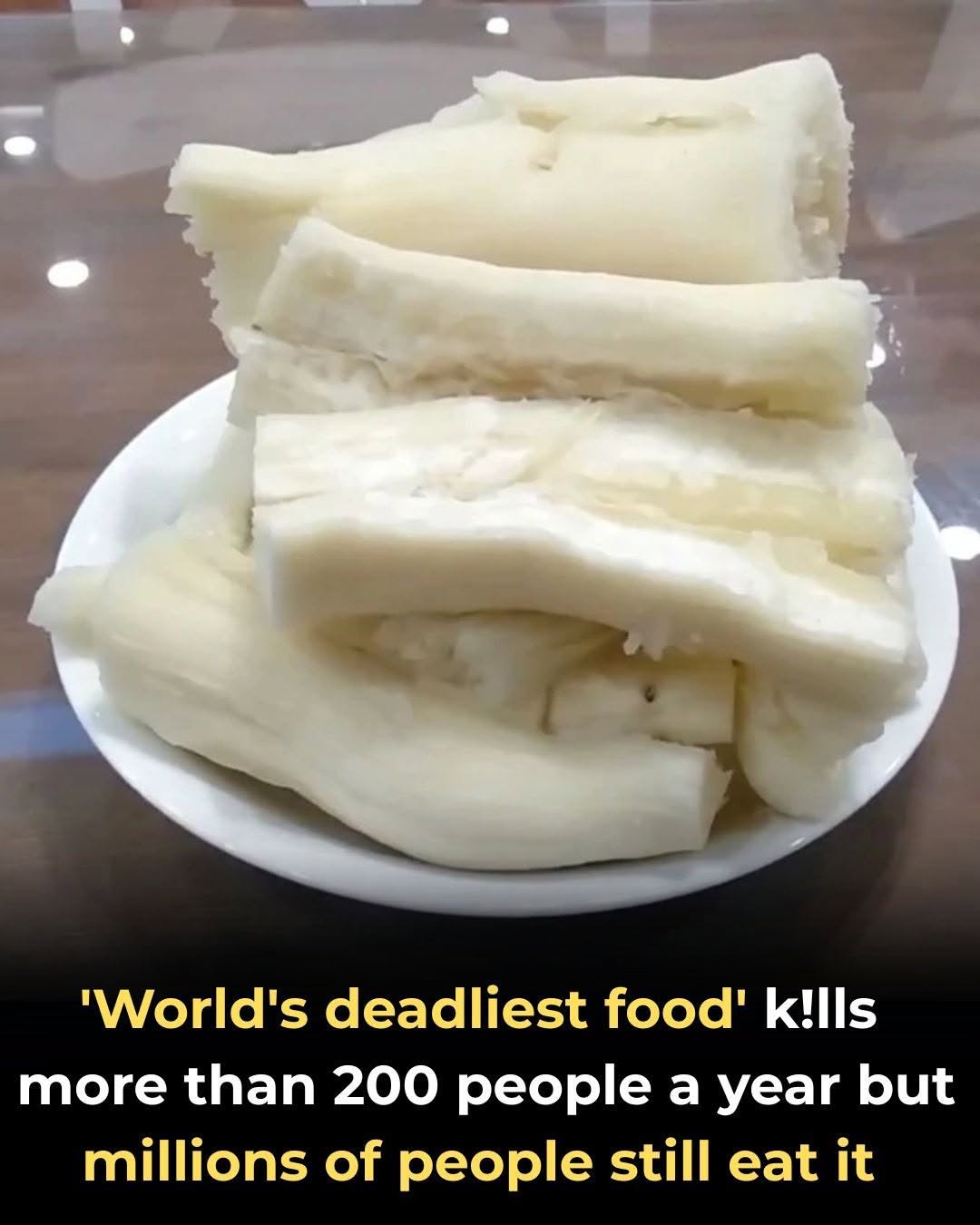
If cassava is part of your diet, it is important to use reliable preparation instructions appropriate for the specific variety.
Do not eat raw cassava roots or improperly prepared cassava products.
Commercial cassava products that have already been properly processed are generally prepared specifically for safe consumption.
A Valuable Food With a Serious Safety Issue
Cassava demonstrates an important principle of food safety.
A food can be nutritious and widely consumed while still requiring careful preparation.
Similar examples exist throughout the world, where traditional processing is necessary to remove naturally occurring toxins or harmful compounds.
In the case of cassava, correct processing can make the difference between a useful staple food and a potentially dangerous source of poisoning.
Conclusion
Cassava is an important staple food consumed by hundreds of millions of people around the world.
Although it contains naturally occurring cyanogenic compounds that can release cyanide, cassava can be safely consumed when it is properly processed and cooked.
The greatest danger comes from eating cassava that has not been adequately prepared, particularly bitter varieties with higher levels of cyanogenic compounds.
Improper processing can lead to cyanide poisoning and, in severe or chronic cases, serious neurological problems such as konzo.
So the lesson is not that people should be afraid of cassava.