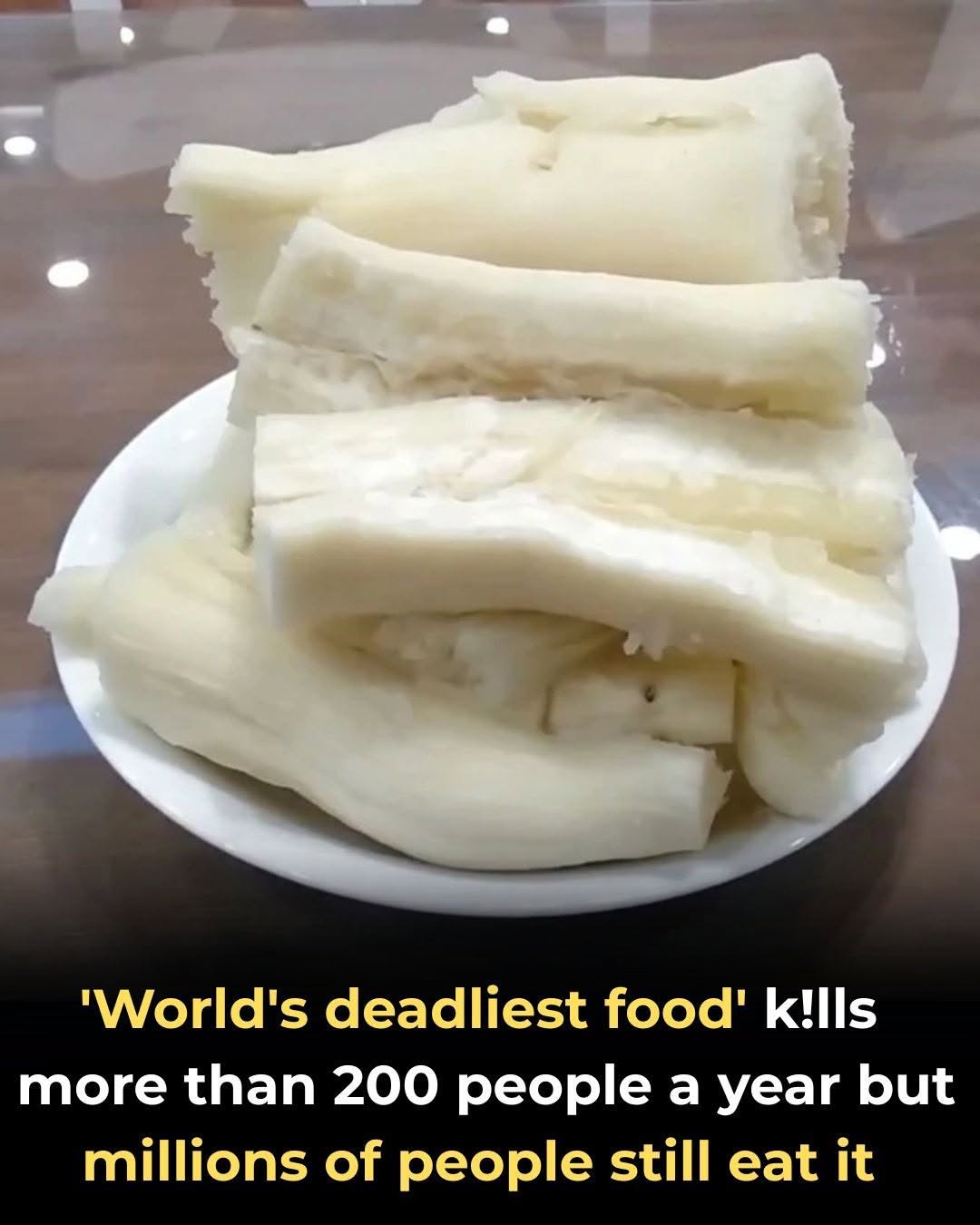
People who traditionally prepare cassava generally rely on established methods appropriate for the particular variety.
Why Food Shortages Can Increase the Risk
The danger can become greater during periods of famine, war, drought, or severe poverty.
When people have limited access to food, they may rely more heavily on cassava.
Under desperate circumstances, people may shorten traditional processing procedures or consume varieties that require more extensive preparation.
This can increase exposure to cyanide.
Cassava Is Not Simply a “Deadly Food”
Calling cassava the “world’s deadliest food” is a dramatic way of presenting the issue.
Cassava itself is not inherently poisonous when it is properly processed.
Millions of people consume cassava safely.
The real concern is improperly prepared cassava, particularly varieties containing high levels of cyanogenic compounds.
This distinction is important.
The Importance of Traditional Knowledge
Communities that have relied on cassava for generations have developed detailed methods for processing it safely.
These traditions can include:
- Selecting appropriate varieties
- Removing the peel
- Grating or crushing the root
- Soaking or fermenting it
- Drying it
- Cooking it thoroughly
Traditional knowledge can therefore play an important role in preventing poisoning.
What Should Consumers Do?
People should not experiment with cassava-processing methods if they are unfamiliar with the plant.