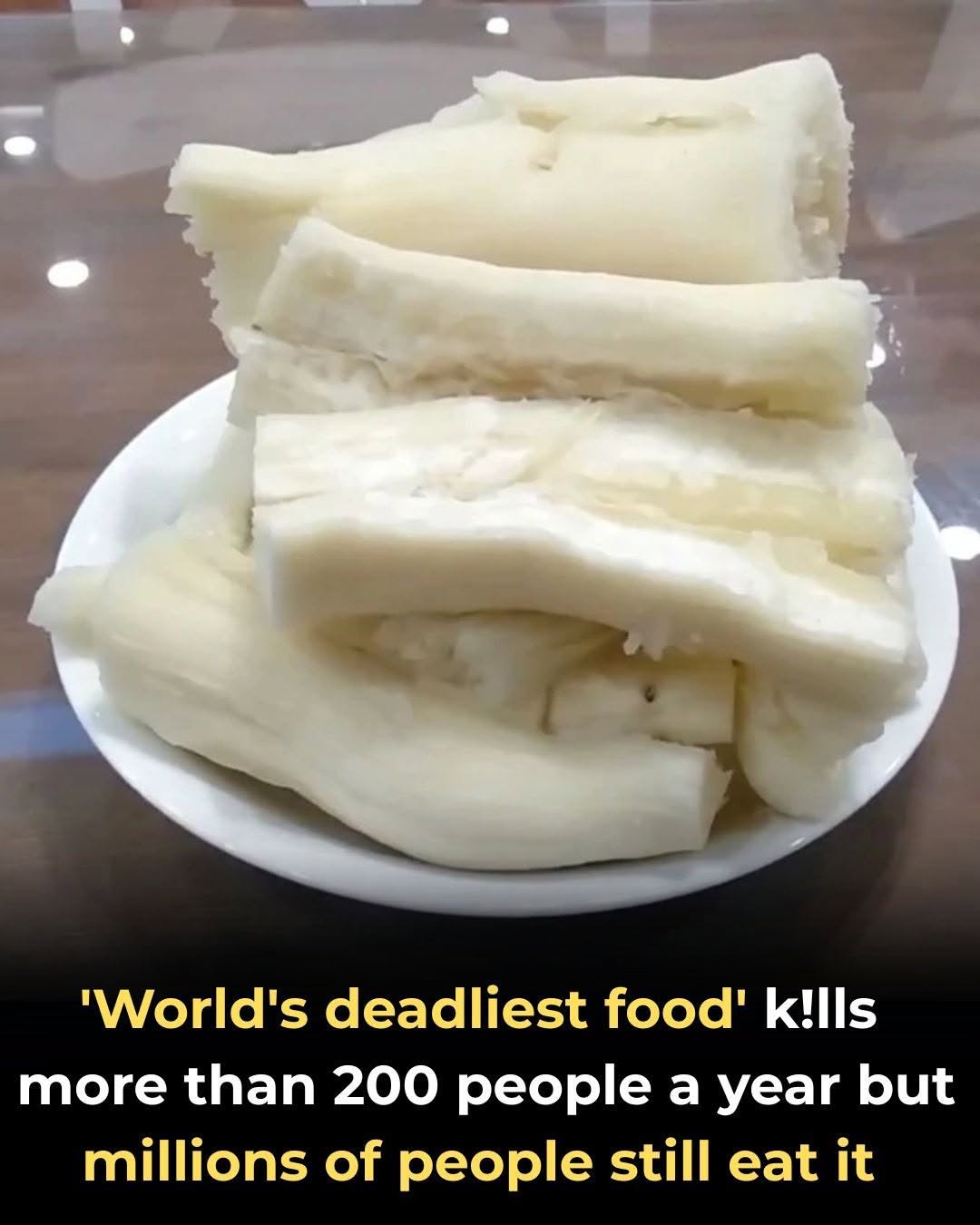
For communities that depend on it as a staple crop, completely avoiding cassava may not be practical.
Instead, traditional food-processing methods have developed to reduce or eliminate the dangerous compounds.
Proper Preparation Is Essential
The key to making cassava safer is proper preparation.
Depending on the variety and traditional method, processing can involve several steps.
These may include:
- Peeling
- Cutting or grating
- Soaking
- Fermenting
- Drying
- Boiling
- Thorough cooking
These processes help reduce the concentration of cyanogenic compounds.
The exact method depends on the type of cassava and the local food tradition.
Soaking and Processing
One method mentioned in discussions of cassava safety involves soaking the cassava for an extended period.
Some traditional processing methods may involve soaking for many hours, sometimes up to a day, followed by additional processing and cooking.
The purpose is to allow harmful compounds to break down or leach out before the food is eaten.
Simply cooking cassava without following appropriate preparation methods may not always be sufficient for every variety or preparation method.
Bitter Cassava Can Be More Dangerous
Cassava varieties are sometimes broadly described as sweet or bitter.
Bitter varieties generally contain higher levels of cyanogenic compounds and therefore require particularly careful processing.
The difference cannot always be judged reliably simply by appearance.